How to Choose the Right Stainless Steel Pipe for Your Project?
When embarking on a project, selecting the right Stainless Steel Pipe is crucial. This decision impacts durability, price, and functionality. Various types of stainless steel pipes suit different applications. Knowing the correct specifications can prevent costly mistakes down the line.
Consider the pipe's grade and size. Each grade has unique properties that affect performance. For instance, some resist corrosion better than others. Evaluating your project's requirements helps narrow down choices.
Be mindful of certifications like ISO or CE. These indicators assure quality and compliance. Choosing a certified supplier enhances reliability. In today's market, the vast options can be overwhelming. Reflect on your project's needs before making a decision. This thoughtful approach will lead to better results in the long run.
Types of Stainless Steel Pipes and Their Applications
When selecting stainless steel pipes, understanding the types and their applications is crucial.
There are several grades of stainless steel, each suited for specific uses.
For instance, the 304 grade is popular in food processing and kitchenware.
It offers excellent corrosion resistance and ease of cleaning.
However, it may not perform well in extreme environments.
Another type, the 316 grade, is preferred for marine applications.
It can withstand saltwater and acidic conditions better than 304.
This makes it ideal for boat fittings and chemical processing.
However, it is typically more expensive, which could affect budget constraints.
Choosing between them requires weighing the specific needs of your project against potential costs.
Welded pipes tend to be light and economical.
They are often used in construction and plumbing.
The seamless variety, while pricier, offers structural advantages.
These pipes are less prone to leaks and can handle high pressure.
Knowing the environment where you will use these pipes can help make a more informed decision.
It’s easy to overlook these details, but they can significantly impact performance and durability.
Factors to Consider When Selecting Stainless Steel Pipe Size
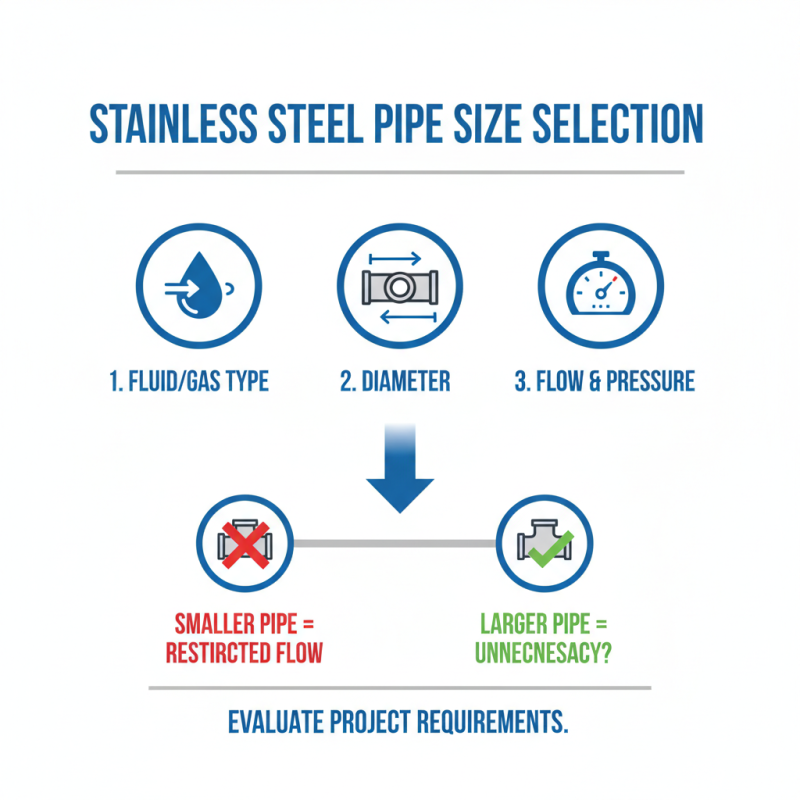
Choosing the right stainless steel pipe size requires careful consideration. Start by evaluating the project's specific requirements. Think about the fluid or gas you will transport. The pipe's diameter plays a crucial role in flow rates and pressure drop. Smaller pipes can restrict flow, while larger ones may be unnecessary.
Next, consider the installation space. Limited areas might require smaller pipes, but ensure they still meet performance needs. A common mistake is underestimating space constraints. If the chosen size is too large, it could lead to complications. Confirm that the fittings and support structures can accommodate your selected size.
Finally, assess the project's overall budget. Larger pipes usually come at a higher cost. Sometimes, a smaller pipe is more economical, but it might lead to future issues. Find a balance between cost and functionality. It's essential to weigh your options carefully before making a final decision. Each project presents its unique challenges, and reflection is key to finding the right solution.
Understanding Stainless Steel Pipe Grades and Their Properties
Choosing the right stainless steel pipe requires understanding its grades and properties. Stainless steel is categorized into several grades, each with unique characteristics. For instance, 304 and 316 are the most common grades used in industries. The 304 grade is known for its excellent corrosion resistance and is suitable for food and beverage applications. It contains 18% chromium and 8% nickel, providing a good balance of strength and ductility.
On the other hand, 316 grade includes molybdenum, enhancing its resistance to chlorides and acids. This makes it a popular choice for marine applications and chemical processing. According to industry reports, about 60% of stainless steel production is in the form of these two grades. However, these grades have limitations. For example, while 304 is less resistant to saltwater, 316 can be costlier, impacting budget-sensitive projects.
When selecting a pipe, consider factors like temperature and environmental conditions. Some projects might not require top-grade materials. Using a lower grade can save costs, but may compromise longevity. Trade-offs are essential in decision-making. Understanding these nuances can lead to better project outcomes. Knowledge of grades empowers informed choices.
How to Choose the Right Stainless Steel Pipe for Your Project? - Understanding Stainless Steel Pipe Grades and Their Properties
| Grade |
Corrosion Resistance |
Mechanical Properties |
Typical Applications |
| 304 |
Good |
Tensile strength: 520 MPa |
Food processing, chemical equipment |
| 316 |
Excellent |
Tensile strength: 580 MPa |
Marine applications, pharmaceuticals |
| 310 |
Good |
Tensile strength: 520 MPa |
High-temperature applications |
| 430 |
Fair |
Tensile strength: 450 MPa |
Decorative applications, automotive |
| Duplex 2205 |
Excellent |
Tensile strength: 620 MPa |
Oil and gas industry, pressure vessels |
Welding vs. Threading: Choosing the Right Joining Method
When considering how to join stainless steel pipes, welding and threading are two popular methods. Each has its advantages, depending on your project’s needs. Welding creates a strong, permanent bond. It is ideal for high-pressure applications. However, it requires skilled labor and specialized equipment. Threading, on the other hand, is simpler to execute. It is quicker and often more cost-effective. Still, it may not provide the same level of strength and durability.
Tips: Always assess the environment. If the pipes will face high stress or extreme temperatures, welding might be the better choice. Meanwhile, for less demanding situations, threading offers flexibility. Remember the complexity of disassembly when making your decision. Threaded joints are easier to separate for repairs. This might save time and effort in the long run.
Evaluate your project’s specific requirements. Don't overlook factors like accessibility. Poor access can make welding challenging. Sometimes, the simplest method isn’t the best. Consider the skills available on your team. If no one is trained in welding, opting for threading can avoid complications. Stay aware of potential weaknesses in either method. A thoughtful approach will lead to a more successful outcome.
Stainless Steel Pipe Joining Methods
Cost Considerations and Budgeting for Stainless Steel Projects
When budgeting for stainless steel projects, it's crucial to consider various cost factors. The price of stainless steel pipes can vary significantly based on grade and thickness. Standard grades like 304 and 316 differ in price due to material properties. Keep an eye on market fluctuations, as prices can change frequently.
Before you start, define your project's specific needs. This will help you avoid overspending on unnecessary features. Evaluate the size and quantity of the pipes required. Design modifications can lead to unplanned expenses. Consider potential wastage during installation. It's often a good idea to buy a little more than estimated.
Tips:
Compare quotes from multiple suppliers. This can help you secure the best deal available. Don't overlook delivery costs, which can add to the overall budget. Lastly, involve professionals early for accurate estimates. Their insights can prevent costly changes later on. Remember, miscalculating your needs now can lead to expensive adjustments in the future.