2026 Best Steel Wire Types for Global Buyers
Choosing the right Steel Wire for global purchasing requires more than comparing price, diameter, and tensile strength. Buyers must examine the wire’s purpose, production route, surface condition, and delivery environment. A bright hard-drawn wire may suit springs, while galvanized wire performs better in outdoor fencing. Stainless Steel Wire can resist corrosion near coastal facilities, but its higher cost needs technical justification.
Metallurgist George Krauss emphasizes, “The properties of steels are controlled by their microstructures.” This principle remains practical for international sourcing. Carbon content, alloy selection, drawing reduction, and heat treatment can change flexibility, fatigue life, and fracture resistance. Experienced buyers should request mill certificates, dimensional reports, coating data, and batch traceability. They should also confirm whether testing follows ASTM, EN, JIS, or another agreed standard.
Real projects often expose the gaps between catalog claims and field performance. A wire can meet tensile requirements yet fail during repeated bending. A thicker zinc coating may protect against moisture, but poor adhesion can still create early damage. These details matter.
This guide examines the best steel wire types for global buyers in 2026. It compares carbon steel, galvanized, stainless, spring, welding, and high-tensile wire. The goal is practical selection, not a universal winner. Every application has trade-offs. Sometimes, the cheapest grade becomes the most expensive decision. Reliable sourcing also depends on supplier audits, sample testing, clear packaging requirements, and honest communication about uncertainty. No specification should be accepted without checking the operating conditions.
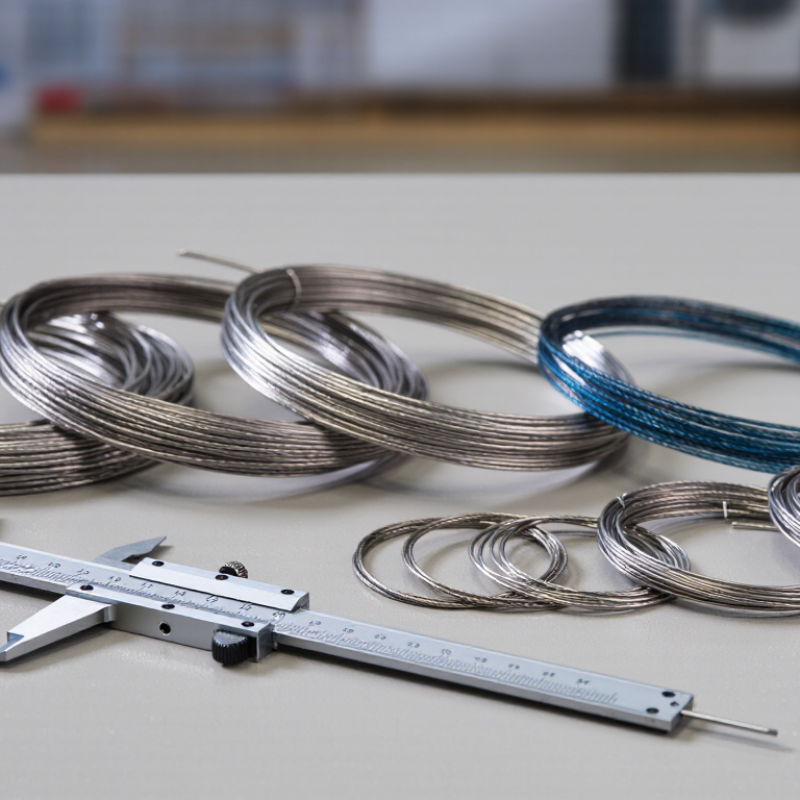
Steel Wire: Definition, Structure, and Core Manufacturing Processes
Steel wire is a long, metal product made mainly from iron and carbon. Its performance depends on chemistry, diameter, surface condition, and internal structure. Low-carbon wire usually contains ferrite with small pearlite regions, giving it useful ductility. Higher-carbon grades develop more pearlite, improving strength but reducing flexibility. This trade-off matters when buyers specify fencing, springs, fasteners, or reinforcement products.
The core process begins with continuously cast steel billets. Hot rolling converts them into wire rod, commonly followed by controlled cooling. The rod is then cleaned through mechanical descaling or pickling. Cold drawing pulls it through smaller dies, reducing diameter and increasing tensile strength. Heat treatment, such as patenting or stress relieving, can restore selected ductility. Galvanizing or other coatings may improve corrosion resistance. The World Steel Association reported 1.89 billion tonnes of global crude steel production in 2023, showing the vast scale of the upstream supply base. However, crude steel volume does not guarantee consistent wire quality. That assumption needs checking.
Tips: Request the grade standard, chemical analysis, tensile range, elongation, coil weight, and surface inspection method. Ask for recent mill test certificates, not generic brochures. ISO 16120 covers non-alloy steel wire rod requirements, while ASTM A510/A510M addresses general wire rod and wire specifications. A sample coil can reveal scratches, rust, ovality, and drawing marks before a large order. Short checks prevent costly surprises.
2026 Best Steel Wire Types for Global Buyers
Steel wire is a long, continuous metal product made by drawing steel rod through dies to reduce its diameter and improve dimensional accuracy. Its performance depends on carbon content, alloying elements, heat treatment, surface condition, and final manufacturing process.
The chart shows indicative typical tensile-strength levels for widely used steel-wire categories. High-carbon, spring, and prestressing wires generally provide the highest strength, while low-carbon and galvanized carbon-steel wires are commonly selected for formability, coating performance, and general-purpose applications. Actual values vary by grade, diameter, heat treatment, coating, and applicable standard.
Reference context: values are representative industry ranges for comparison and should be verified against the specified product standard, such as EN, ASTM, or ISO requirements.
Major Steel Wire Types and Their Distinctive Properties
Steel wire selection starts with chemistry, surface protection, and the load profile.
Low-carbon wire is ductile and easy to bend, making it suitable for mesh, ties, and general fabrication.
High-carbon wire offers greater tensile strength and fatigue resistance. It fits springs, ropes, and demanding mechanical parts.
Galvanized wire adds a zinc barrier against moisture and salt. Coating mass, adhesion, and edge coverage deserve close inspection.
Stainless steel wire resists corrosion and remains useful in food, medical, coastal, and architectural applications. However, its higher alloy content raises cost.
The International Stainless Steel Forum reported global stainless steel melt-shop production of about
62 million tonnes in 2024, showing the scale of this material family.
Alloy and spring wires can deliver better elasticity, wear resistance, or heat performance.
Prestressing wire uses controlled strength and low relaxation for concrete structures.
Common grades reach approximately 1,860 MPa tensile strength, but project standards must confirm the value.
World Steel Association data recorded about 1.88 billion tonnes of global crude steel production in 2024.
That figure signals broad supply capacity, not automatic product suitability.
A cheaper wire may fail through poor coating, inconsistent diameter, or weak traceability.
Buyers should compare test certificates, dimensional tolerances, packaging, and sampling methods.
This is where many purchasing decisions remain imperfect.
How to Select Steel Wire for Different Industrial Applications
2026 Best Steel Wire Types for Global Buyers
Selecting steel wire starts with the application, not the lowest quoted price. Low-carbon wire bends easily and suits mesh, binding, and light forming work. High-carbon wire offers stronger tensile performance for springs, cables, and demanding mechanical parts. It usually needs tighter control during drawing. Small cracks can grow after repeated loading.
Corrosion exposure changes the decision. Galvanized wire protects fencing, outdoor supports, and agricultural equipment from moisture. Stainless steel wire performs better near saltwater, chemicals, or hygienic processing areas. However, stainless grades differ in strength, magnetic response, and corrosion resistance. Check the exact environment, not just the material name.
Construction projects often require prestressing wire with controlled strength and elongation. Welding applications need consistent chemistry and a clean surface. For every order, confirm diameter tolerance, tensile strength, coating mass, coil weight, and test documentation. Ask for sample inspection when the wire will enter an automated line. It saves trouble later.
A practical selection review should include bending tests, surface checks, and storage conditions. Humid warehouses can damage suitable wire before installation. That detail is often missed. Cost comparisons should include drawing losses, rejected coils, transport protection, and replacement risk. No specification is perfect. A buyer may still need to adjust the choice after real production feedback.
2026 Buying Factors: Pricing, Supply Chains, and Sustainability
For global buyers, steel wire selection in 2026 starts with the application, not the lowest quotation. Low-carbon wire suits general forming, while high-carbon wire supports springs, ropes, and demanding tension. Stainless wire resists corrosion, but its alloy content can raise costs sharply. Galvanized wire adds a zinc layer; coating weight and adhesion deserve inspection. Ask for mill certificates, tensile results, diameter tolerances, and coating measurements. Paperwork matters.
Pricing should include more than the quoted price per ton. Buyers need to compare raw material adjustments, tooling charges, packaging, inland transport, insurance, and port fees. A low offer can become expensive after currency changes or delayed shipments. Request a clear validity period and production schedule. Smaller test orders can expose quality issues before full-volume purchasing. This step may slow procurement, but it can prevent costly rework.
Supply chain reliability depends on production capacity, port access, and backup routes. Confirm whether the supplier can maintain diameter consistency across several batches. Request recent inspection records, not only standard declarations. Sustainability also requires measurable evidence. Review recycled steel content, energy sources, emissions data, water controls, and scrap recovery. An environmental certificate helps, but it does not prove every process is responsible. Traceability can be incomplete. Buyers should record that weakness and require corrective evidence before approving long-term volumes.